Search This Blog by Google

Search This Blog

Welcome to Dijemeric Visualizations

Where photography and mathematics intersect with some photography, some math, some math of photography, and an occasional tutorial.

Total Pageviews

Saturday, April 02, 2011

Miraflores Revitalization Kickoff

0644Miraflores Master Plan0635 History and Change0794 Icons of Their Times0643Miraflores Creek Schematic0645 Miraflores Senior Housing0649_50_51_Patrick Lynch MC
0666Bill City Manager Lindsay0679 Mayor McLaughlin0682 Keith Takata Deptuy Regional Administrator USEPA0698Good Weather for a Talk by Housing Director Patrick Lynch0714 A Family Perspective from Robert Sakai0725_6_7_Madalyn Law Adresses the Audience
0734_5_6_ Another Use for a Fire Truck0745_6_7_8_9_ The First to Go0752 Kobelco Krunch0761_2_3_4_ Coming Down0767 A Big Bite0769 And a Party Balloon Too
0770 Keep Back0775 A Team for Change0779 Over There0780 Levels of Photography0782 Dust Control0783 Irrigating a Demolition
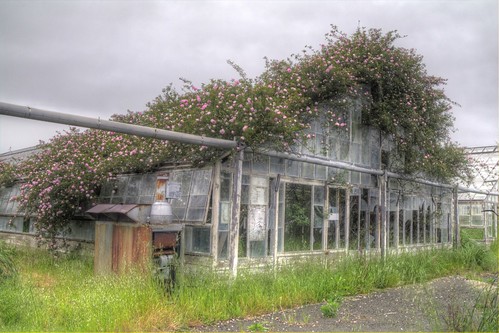
I've made several visits to the former rose and carnation greenhouses of the Sakai, Oishi, and Endo families in Richmond (CA). Roses still grow there even though unattended for some years.

Soon these greenhouses will be replaced with homes and townhouses. Some of the history will be saved and restored as a reminder of Richmond's past.

For more information on the Miraflores development see http://www.ci.richmond.ca.us/index.aspx?nid=1847

Saturday, January 22, 2011

Richmondocks-152 (photo by Dale Mead)


Richmondocks-152
Originally uploaded by dfmead

On Jan 21 together with fellow photographer Dale Mead, I returned to Richmond Shipyard Number 3 (Richmond, CA) for more photos from the decks of the Whirley Crane. The crane rises about 60 feet above ground, but I decided not to climb the last set of ladders despite having climbing gear for the ascent.

I used climbing gear as a safety precaution while shooting. It let me pay attention to my shooting and not worry about stepping off the deck. The last three photos in this series are from my photo-archives of Richmond's Shipyard Number 3.

While I took shots from the deck of the crane, Dale shot a series from the ground.


For photos by Dale Mead, photo-documentarian, see http://www.flickr.com/photos/damead/sets/72157625753800053/with/5377627350/

Tuesday, January 18, 2011

Shipyard Number 3 and the Whirley Crane

World War II brought many changes to Richmond, CA. Agriculture and whaling were replaced with ship building. Some remnants of that time remain, such as a couple of Navy tugs, the Red Oak Victory Ship, and one last example of a Whirley Crane.

The Whirley Crane takes its name from its ability to 'whirl' the turret 360 degrees. It was used sometimes more than one at a time to lift ship parts so that welders could get access more readily. Nearly 500 ships were built in the Richmond shipyards for the war.

Thursday, December 30, 2010

Sakai Rose Company Nursery Site

Soon to be developed in new residences for the City of Richmond, the greenhouses of the former rose and carnation nurseries remain for now. Once these greenhouses were some of the most productive on the West Coast, given the mild climate and extended growing season. Changes in tax law made imports cheaper and eventually led to the closure of these and other greenhouses in California and the U.S. Today this site in Richmond is one of the last remaining as a reminder of the past. Some of the structural reminders of that past will be allowed to remain as a link to our past and heritage.

Wednesday, December 29, 2010

4734_5_6_7_8_Fog Shrouded Hills Of Wildcat Canyon

A break in the rain was an opportunity to capture that brief interlude when the morning mists roll over the hills. This view is from the San Pablo Ridge at the Richmond end looking south east. The site of the former Belgum Sanatorium is just visible at the lower right.

Friday, December 17, 2010

2010 Laboratory Christmas Potluck


Once again those hard working lab folks take time out for the annual Christmas potluck where hidden talents are expressed and green is the color of the day.

Sunday, September 12, 2010

Blossoms & Thorns: The Legacy of Richmond's Historic Japanese American Nurseries
September 14th - November 13th
Reception:
September 25th 3:00 PM - 5:00 PM


Thursday, August 05, 2010

Growing Tomatoes in the Fog Zone

Before moving to the East Bay (Richmond, CA) I lived in Davis (CA) where the summers are hot and the tomatoes grow taller than giraffes (slight exaggeration).  East Bay's summers are typically not hot and are sometimes confused for winter by those who do not live here.  Tomatoes do not grow as tall as giraffes here.  In fact it is difficult to get tomatoes to grow or at least grow tall and ripen, but I usually try anyway and somehow, this year, I got some surprises.

My first surprise was finding heirloom tomatoes at a local nursery (Spiral Gardens, 2830 Sacramento St. Berkeley).   I first tasted heirloom tomatoes 2 years ago and found them tasty and satisfying.  They seem to be catching on, and are available in the local 'organic' food stores.  Getting them at a nursery as 1-gallon plants was unexpected and worth another growing effort.


My second surprise was that not only did these plants grow, but flourished!  I planted five, three in one raised bed and two in another a few feet away.  In one bed the plants exceed my height by 2-3 feet while in the other adjacent bed they do not come to my waist.  The difference is due to fava beans, which I had planted in one of the beds as a green manure crop not expecting to plant anything else this season.


 The purchase of the tomato plants was not planned and there was limited room in a bed where chard, parsley, and mints filled most of the small space.  Figuring I would soon harvest the fava beans, I put three of the plants in with the beans and the other two with the chard et al.  Two months later, and with the beans still not harvested, it became obvious there was no need to thin the beans as the tomatoes were decidedly not crowded but were exceeding even my UC Davis days expectations.  


Fava beans are nitrogen fixers and tomato plants have need for lots of nitrogen to do well.  The combination was working quite well.  Of course, big plants does not equate to vine ripened tomatoes, but I do have a crop of tomatoes waiting for some warm weather to fully ripen.  Come back in a month and see what happens.  


Wednesday, June 23, 2010

Dew Not Confuse It With Guttation

Early morning and droplets of dew hang off the leave of plants - except this is not dew but water of gutattion.  What's the difference?  It sure looks like dew.


Let's take a closer look at one of these 'dew' drops.


Notice that the droplet is at the end of a leaf.  Plants take water out of the soil and release it into the atmosphere as a vapor through openings in their leaves called stomata.   This process is termed transpiration.  Sometimes transpiration is inadequate to remove excess water and instead of vapor, droplets of mineral laden water are released through openings similar to the stomata.  This process is termed guttation and it occurs mostly in the morning when the humidity is high.  It also occurs if the plant has been recently watered.

These shots were taken early in the morning, but it's also possible I'm over watering my tomato plants!  For more information on guttation and plant physiology see http://en.wikipedia.org/wiki/Xylem.

Tuesday, June 15, 2010

Classic Chemistry - The Way it Was in 1962


Fifty years ago electronic balances were the great new technological addition to analytical chemistry. The instructor for my quantitative analysis class did not inform his students that these were available until after we had been given the gratifying experience of using double pan balances requiring that we 'count the swings' for highly precise and accurate weighings. At the end of the second week we found out just how marvelous the new balances were but not until our notebooks had been filled with many pages of weighings.  I still have that notebook and so will share a lab exercise.


The lessons learned from this exercise in 1962 remain with me as a way of conceptualizing the measurement process. All measurements can be represented numerically but also possess a physical reality. Counting the swings on a balance to estimate the last significant figure in the measurement gives a feel to the measurement process that a readout on a display cannot match.

The 3 minute video 'Classic Chemistry - The Way it Was' is based on the notebook entries for one afternoon in the Chemistry 131, Quantitative Analysis, laboratory in 1962. The sixteen pages of entries are mostly weighings with some calculations and notes. That was the way it was.


Friday, May 28, 2010

Misterken Retires from the Lab

After 33 years at EBMUD doing lab rat work, I have decided it's time to do something else. So I'll hang up the lab coat I seldom wore, sling camera bag over my shoulder, and see what awaits.

Lab staff, as usual, gave a nice sendoff complete with sugary treats, a plaque proving I really existed for 33 years, a finely tuned roast by a master roaster, and an accomplished photographer to capture the final moments.  All-in-all a wonderful farewell. 


I think there was hidden meaning in this...but I'm unable to detect what it is!

Two cakes!  Plus a bowl of cherries!  Auspicious. 

Nirmela prepared a test of my knowledge of applied measurement theory.  


Note that while the mouse is visible it cannot be weighed on these scales and therefore does not exist. 
I passed the test. 


Linnea shows her talents as a Roasting Toastmaster
I'm feeling a bit warm.  


I yielded and agreed to all ten reasons given for my departure with a margin of error of +/- 100%.


Finally - the Cake!

Sunday, May 23, 2010

510Arts and the Ghost Roses Exhibit

It's official.  510Arts for the cities of Berkeley, Emeryville, Oakland, and Richmond has announced the annual Call for Submission to artists living in the 510 area code.  If you are an artist living in the 510 area code, check it out.

And if that weren't enough - the announcement includes my photo The Boiler Room shot at the former Sakai Brother's Rose Nursery in Richmond

AND the highly acclaimed and anticipated Ghost Roses exhibit featuring fine art photography by Ellen Gailing, Matt Matsuoka, Fletcher Oakes, and me will open September 14 and run through Nov 13, 2010 at the Richmond Art Center in Richmond, CA.

Watch here for more details.  

Thursday, May 20, 2010

By Popular Demand - High Dynamic Range Tutorial

This is a re-post of a popular tutorial on High Dynamic Range Photography, also called HDR. If HDR is new to you or you've heard of it but don't know exactly what it is or how to do it, watch this slide show.


High Dynamic Range Photography Explained - A Tutorial

Sunday, May 16, 2010

Ghost Roses

On the west side of Interstate 80 as it crosses through the cities of Richmond and El Cerrito are the remnants of a rose and carnation nursery. Forty abandoned greenhouses remain, some with roses still growing unattended. Family farmhouses (3), boiler rooms, and water tanks serve as reminders that this was once a farm.

The nursery began in 1906 with a single greenhouse  and grew to 40 greenhouses on 12 acres with the Sakai, Oishi, and Maida-Endo families.  No longer in production, roses still flourish in the abandoned greenhouses.  One greenhouse wears a cape of roses.  The carnations fare less well having shallower roots that cannot reach the water table during the dry season.

Soon, this will be only a memory except for a portion that the City of Richmond plans to retain, something like Vision for Restoration, the panorama shown below.


In September 2010, through the efforts of Susan Sharfman, Michele Seville, and Emily Anderson, an exhibit including my work and that of three other photographers will be on display together with an historical context provided by the National Park Service, the Cities of Richmond and El Cerrito, and Donna Graves an historian who has authored the report Historic Architectural Evaluation of the Sakai, Oishi, and Maida-Endo Nurseries of Richmond, CA available at www.ci.richmond.ca.us/DocumentView.aspx?DID=2144.  


More information will be available as plans for this exhibit are still in progress. 

Friday, May 14, 2010

A Dijemeric Tutorial - Printing At Costco

Back by popular demand, my Tutorial on Printing at Costco explains how to send your digital images to Costco and use of a profile to get the best results.

View slideshow

Wednesday, May 12, 2010

Strategies for Sampling in a Potato Warehouse

You rent a warehouse in the Mission District of San Francisco for the purpose of storing potatoes.  The storage space is not big with barely enough capacity to hold 5 tons, or 10,000 pounds of potatoes.  The owner of the warehouse is concerned that you might try and exceed that quantity and has placed a penalty clause in the contract if you do.  He also requires an annual inventory of the quantity of potatoes you are storing.  

You hire a high school student to weigh potatoes so you can determine how much is in a warehouse.  To estimate the weight of potatoes in the warehouse without paying the student to weigh each and every potato you've decided that you will have him make no more than 100 weighings, randomly selected.  Once the potatoes are sampled and weighed you will estimate the total weight by multiplying the average weight per gallon of potatoes times the total volume of potatoes in gallons in the warehouse (you know this because you have a calculator and are good at math).

To do this weighing, would it be better to have the student weigh lots of individual potatoes one at a time or weigh composites of several potatoes at a time in fewer collections of a gallon each?  And should you caution the student to take care in weighing?  Does it matter if you are just a little bit over the 10,000 pounds?  Will the weighings more likely show you are over if the weighings are precise?

The answers may not be immediately obvious and depend on at least three variables: 1) the precision of the student in taking the weights and volumes, 2) the difference between the actual 'true' weight of potatoes in the warehouse and the penalty threshold, and 3) whether the actual weight is above or below the threshold.  To test how these three variables can affect the outcome, I have developed A Monte Carlo Model for Sampling Potatoes or Anything Else.  Try it for yourself.


Enter the measurement precision (also known as percent relative standard deviation  or %RSD) in cell B3, the potato penalty threshold in cell B4,  and the expected true weight of potatoes in cell B5.  The outputs are in cells D7 (percentage hits exceeding the penalty threshold for weights of single potatoes) and E7 (percentage hits for collections of potatoes).

The small chart displays overall statistics of average, standard deviation (a measure of variability), RSD (a measure of precision), and number of Hits (number of times the given sampling method exceeds the penalty threshold).  In the example shown here, the averages for both methods exceed 10,000 pounds and the number of hits are 4800 for the single potato approach and 5500 for the collection of potato approach.  The true value was set at 10,000 and precision at 50% (i.e., sloppy technique) for the default settings. 

The long chart displays the first ten samplings of the student under the two different sampling methods and can be used as a check to track his performance.

Try entering different values for RSD, threshold, and true weight and see what you get.  For example, if the student is sloppy does it make any difference if the threshold is above or below the true value?  If the student is very precise can you get closer to the threshold without a penalty?  And don't be timid about the actual weight of potatoes.  You might try putting in more than 10,000 pounds and see if you can avoid the penalty!

Tuesday, May 04, 2010

The Drunkard's Walk

Random events can be misleading.  Flip a coin.  It has a 50% chance of landing heads and 50% tails.  Now suppose it has landed heads 10 times in a row.  What are the chances it will land heads up on the next toss?  If it is truly an unbiased coin, the odds for a heads up will be 50%.  Past events have no effect on future events.  But what are the odds that a coin will land heads up ten times in a row? 

The chart below shows a plot generated from a random number generation program, Drunkard's Walk.  Try running the program Drunkard's Walk yourself and see what kind of trends you can generate from a random process. Enter any number in cell B8 (Count).  Press return.  Each plotted point is the sum of the previous plotted point plus the random assignment of a one or a minus one.  Are there trends?  Does it always look random?

Monday, May 03, 2010

Twenty Seven Years of Rainfall Records

Rainfall records on a home rain gauge measuring the rainfall in Richmond CA on the Wildcat Canyon ridge since 1982.  


Rainfall Records by Year